


A dynamic, precise and clear course, with sufficient material and sources of information for students to start learning about sustainable tourism. Learn the basics about the 2030 Agenda, the Sustainable Development Goals and the Sustainable Tourism guide. Learning Objectives Enumerate the goals of sustainable tourism. Discuss the principles of sustainable tourism. Explain the requisites to achieve sustainable tourism. Point out...

This course will provide you with substantive insights into the management challenges facing destinations and operators. It will show you the proper steps to follow forresearch-informed resolutions. The course comprises seven modules, with each module co-delivered by two or more expert academics. Developed in partnership with Tourism and Events Türkiye, the statutory marketing authority for tourism in Türkiye, several modules...
Sustainable finance refers to the process of taking environmental, social and governance (ESG) considerations into account when making investment decisions in the financial sector, leading to more long-term investments in sustainable economic activities and projects. Sustainable finance has a key role to play in delivering on the policy objectives under the European green deal as well as the EU’s international...

Budget planning is the act of creating and maintaining a budget, then using it to make strategic business decisions and guide organizational changes across various departments. With correct budgetary planning, company stakeholders can have a more substantial idea of the organization’s financial standing and current and future financial needs. In this course, you’ll learn to identify the characteristics of an...
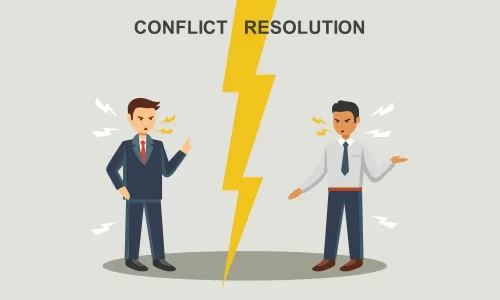
This Conflict Resolution training course teaches you how to unpack what creates conflict in the workplace, gain a strong insight into why people act the way they do, have empathy for difficult and diverse behaviours, grow your emotional intelligence, and be able to work among a range of communication styles. You will be able to identify and deal effectively with...

Problem-solving and decision-making are terms that are often used interchangeably since both use information to inform a certain action. You cannot solve a problem without making a decision, but that’s where the similarities end. The main difference is that the first is a process and the second is an action. Problem-solving is an analytical method to identify the possible solutions...
Being able to communicate effectively is perhaps the most important of all life skills. It is what enables us to pass information to other people, and to understand what is said to us. You only have to watch a baby listening intently to its mother and trying to repeat the sounds that she makes to understand how fundamental is the...

Stress management offers a range of strategies to help you better deal with stress and difficulty (adversity) in your life. Managing stress can help you lead a more balanced, healthier life. Stress is an automatic physical, mental and emotional response to a challenging event. It’s a normal part of everyone’s life. When used positively, stress can lead to growth, action...
Body language is a powerful form of non-verbal communication, and through it you convey a range of emotions and reactions to others. While verbal and written communication will vary from country to country and region to region, human body language can be quite universal. Hence, learning how to make accurate interpretations of other’s body language helps you build better relationships,...
Anger can be an incredibly damaging force, costing people their jobs, personal relationships, and even their lives when it gets out of hand. However, since everyone experiences anger, it is important to have constructive approaches to manage it effectively. Anger Management is a course that will help you learn how to identify anger triggers and the coping and planning techniques...
This course teach you how to use different media to tell a story, share news or entertain an audience. In the program, you learn about the technologies and software programs necessary to create visual and audio productions or designs. Production involves using or combining both audio and visual elements to complete a certain project. Examples of productions include commercials, shows,...
In futurism and science fiction, the metaverse is a hypothetical iteration of the Internet as a single, universal and immersive virtual world that is facilitated by the use of virtual reality (VR) and augmented reality (AR) headsets. In colloquial use, a metaverse is a network of 3D virtual worlds focused on social connection. The term “metaverse” originated in the 1992...
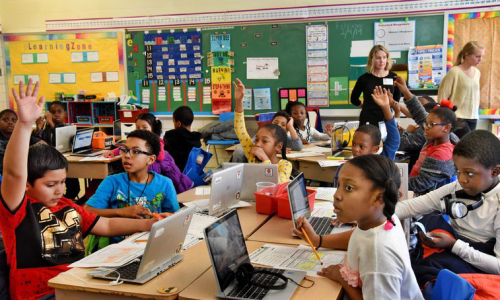
This course prepares teachers psychologically and pedagogically for working with students coming from different backgrounds. It describes the shortcomings and advantages for all the factors involved: teachers, native students, new coming students, parents, institution. It aims at raising awareness of the new teaching strategies that the teacher needs to approach in order to deliver classes that promote inclusion and tolerance....
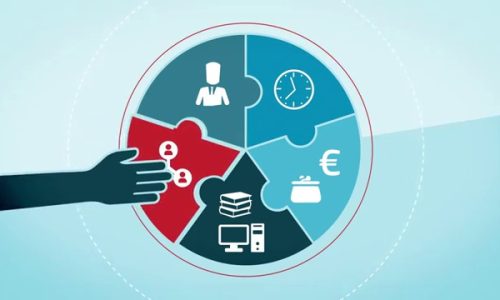
Early School Leaving is directly connected to unemployment, social exclusion and poverty. Personal or family problems, learning difficulties, conflicting dynamics, a difficult socio-economic situation are all factors that influence students to drop-out from school prematurely together with the pedagogic methods, the school climate and the relationship teacher-pupil. Today is more than important to work on these factors to prevent and...
Hearing impairment, deafness or hearing loss refers to the inability to hear things, either totaly or partially. Symptoms may be mild, moderate, severe or profound. It has many impacts on students’ learning such as understanding new concepts, especially language based, interacting with other students, delayed communication skills and slow development of vocabulary. Moreover, hearing loss effects an individual’s ability to...

Gifted education (also known as gifted and talented education (GATE), talented and gifted programs (TAG), or G/T education) is a broad group of special practices, procedures, and theories used in the education of children who have been identified as gifted or talented. The main approaches to gifted education are enrichment and acceleration. An enrichment program teaches additional, related material, but...

Financial literacy is the possession of the set of skills and knowledge that allows an individual to make informed and effective decisions with all of their financial resources. Raising interest in personal finance is now a focus of state-run programs in countries including Australia, Canada, Japan, the United States, and the United Kingdom. Understanding basic financial concepts allows people to...

Digital literacy refers to an individual’s ability to find, evaluate, and communicate information through typing and other media on various digital platforms. It is evaluated by an individual’s grammar, composition, typing skills and ability to produce text, images, audio and designs using technology. The American Library Association (ALA) defines digital literacy as “the ability to use information and communication technologies...
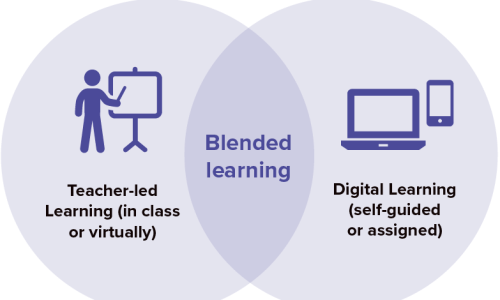
Blended learning, also known as hybrid learning, technology-mediated instruction, web-enhanced instruction, or mixed-mode instruction, is an approach to education that combines online educational materials and opportunities for interaction online with physical place-based classroom methods. Blended learning requires the physical presence of both teacher and student, with some elements of student control over time, place, path, or pace. While students still...
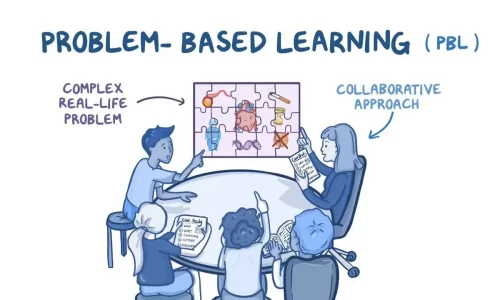
Problem-based learning (PBL) is a student-centered pedagogy in which students learn about a subject through the experience of solving an open-ended problem found in trigger material. The PBL process does not focus on problem solving with a defined solution, but it allows for the development of other desirable skills and attributes. This includes knowledge acquisition, enhanced group collaboration and communication....

Project-based learning is a student-centred methodology that engages students in developing critical thinking through undertaking authentic, meaningful projects. Project-based learning (also known as PBL) is a teaching strategy that focuses on real-world problems and challenges using problem-solving, decision-making and investigative skills. It is increasingly being used across disciplines because of its capacity to engage students in developing self-directed learning skills....
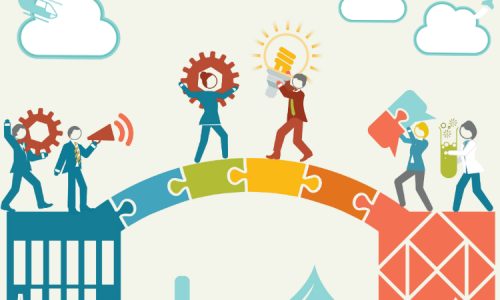
Non-formal education refers to planned, structured programmes and processes of personal and social education for young people designed to improve a range of skills and competences, outside the formal educational curriculum. Non-formal education is what happens in places such as youth organisations, sports clubs and drama and community groups where young people meet, for example, to undertake projects together, play...
One of the biggest challenges many teachers face—especially at the beginning of their careers—is classroom management. It’s just not easy to keep 25 kids interested, engaged, and focused. Classroom management skills usually improve with experience—but some teachers seem to have a gift for it right from the get-go. They seem to connect with kids and keep them focused on the...
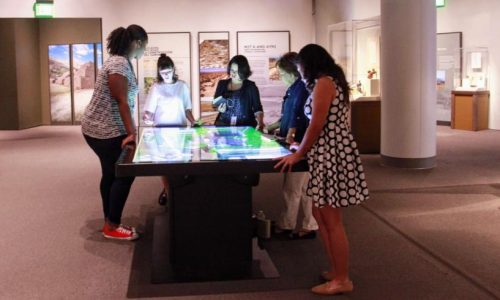
Learning is not limited to the classroom. Museums are important educational environments and offer a considerable learning potential. Collections exhibited in museums provide pupils with a tangible connection with time, places, events, or people and allow them to experience the evolution of human history and cultural heritage. Learning in museums helps pupils understand the historical value of objects, respect diverse...
Distance education, also known as distance learning, is the education of students who may not always be physically present at a school or where the learner and the teacher are separated in both time and distance. Traditionally, this usually involved correspondence courses wherein the student corresponded with the school via mail. Today, it usually involves online education and the learning...

Environmental education (EE) refers to organized efforts to teach how natural environments function, and particularly, how human beings can manage behavior and ecosystems to live sustainably. It is a multi-disciplinary field integrating disciplines such as biology, chemistry, physics, ecology, earth science, atmospheric science, mathematics, and geography. The United Nations Educational, Scientific and Cultural Organization (UNESCO) states that EE is vital...

A flipped classroom is an instructional strategy and a type of blended learning, which aims to increase student engagement and learning by having pupils complete readings at home and work on live problem-solving during class time.[1] This pedagogical style moves activities, including those that may have traditionally been considered homework, into the classroom. With a flipped classroom, students watch online...

The Internet and all digital technology is now an essential part of our lives, providing many positive experiences for families and teachers, and it is being used at an ever-younger age. Cybersafety is an extraordinarily important pre-requisite for making the most of the opportunities offered by the Internet, so it is absolutely important to become aware of and master the...

The course will consider the pedagogical theory behind the success of this approach as a teaching and learning model. Throughout the course, you will have an opportunity to create your own games from simple slide shows, through physical puzzles and conundrums to live interactive games. Each module will provide examples and models and suggestions for further reading and research on...
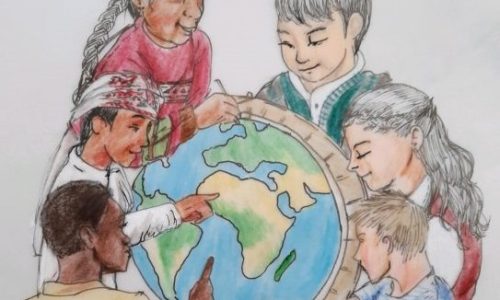
Cultural heritage is the heritage of tangible and intangible heritage assets of a group or society that is inherited from past generations. Not all heritages of past generations are “heritage”; rather, heritage is a product of selection by society. Cultural heritage includes tangible culture (such as buildings, monuments, landscapes, books, works of art, and artifacts), intangible culture (such as folklore,...
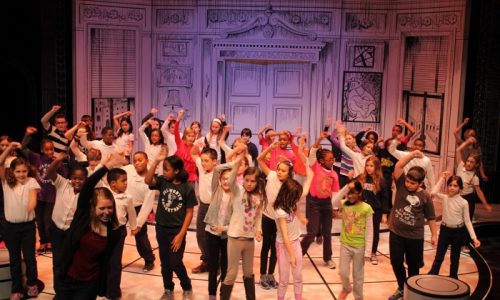
Creative drama is a type of theater used for educational purposes that helps children work on social skills and academic subjects using theater games and improvisations while being led by a trained instructor. It provides a safe environment for students to explore behavior, ideas, creativity, and school subjects. Ultimately, creative drama is an out-of-the-box approach to learning that engages imagination,...
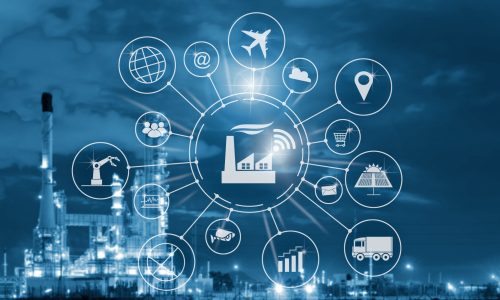
Digitization is the process of converting information into a digital format. The result is the representation of an object, image, sound, document, or signal (usually an analog signal) obtained by generating a series of numbers that describe a discrete set of points or samples. The result is called digital representation or, more specifically, a digital image, for the object, and...
Our course focused on STEAM, aims to help you to get new innovative ideas for hands-on activities because there is no more practical field. We should rather say fields because STEAM is the interdisciplinary itself. The course is interesting not only for educators who teach STEAM but also for non-STEAM teachers that want to get into its mysteries and implement...

Peer Bullying can be defined as the psychological pressure that a student exerts on another student through verbal, emotional, or intimidation. Sometimes it can apply pressure from a group of students. Those behaviors repeat and become organized. Bullying behaviors do not always include direct hostile behavior. Those bullying behaviors are seen as logical under the name of jokes or friendly...
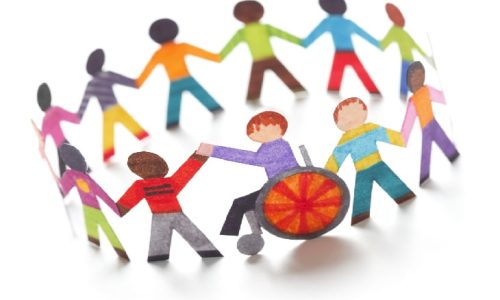
The United Nations Educational, Scientific and Cultural Organisation – UNESCO – defines inclusive education as “the process of identifying and responding to the diversity of needs of all learners through increasing participation in learning, cultures and communities, and reducing exclusion in education”. It is based on the principle that each child has different characteristics, interests, abilities and learning needs and...
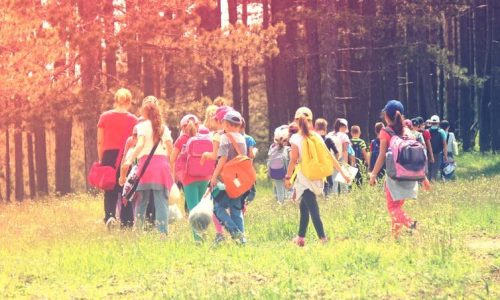
Outdoor education can be simply defined as experiential learning in, for, or about the outdoors. The term ‘outdoor education’, however, is used broadly to refer to a range of organized activities that take place in a variety of ways in predominantly outdoor environments. Common definitions of outdoor education are difficult to achieve because interpretations vary according to culture, philosophy, and...
Gamification is the strategic attempt to enhance systems, services, organizations, and activities by creating similar experiences to those experienced when playing games in order to motivate and engage users. This is generally accomplished through the application of game-design elements and game principles (dynamics and mechanics) in non-game contexts. Gamification in education and Game Based Learning, can be particularly effective to...

The 3D printing process was devised in the 1980s and originally known as ‘rapid prototyping’. It enabled companies to develop prototypes quickly and more accurately than with other methods. After over 30 years of innovation, its uses are far more diverse today. Manufacturers, engineers, designers, educators, medics, and hobbyists alike use the technology for a huge range of applications. 3D...

Cyberbullying is bullying that takes place over digital devices like cell phones, computers, and tablets. Cyberbullying can occur through SMS, Text, and apps, or online in social media, forums, or gaming where people can view, participate in, or share content. Cyberbullying includes sending, posting, or sharing negative, harmful, false, or mean content about someone else. It can include sharing personal...

Entrepreneurship education pursues the development on students of the knowledge, skills and motivation to encourage entrepreneurial success in a diversity of settings. Each level of education, from primary school until graduate university level variations of entrepreneurship education are offered since the competences and abilities to be developed are in tune with the main pedagogical goals to be pursued in each...

Coding is a set of instructions that a robot can interpret and follow. Robotics is the application of electronics, mechanics, and programming tools to program robots to do certain tasks. Robots are capable of executing things that humans are unable to. In robotics, both block-based and text-based coding is utilized. Coding is the method of interacting with computers. Our course...

Websites that stress user-generated content, user-friendly participatory culture, and end-user interoperability are known as “Web 2.0” sites. By improving your teaching strategies and the skills of your pupils, using technology in the classroom has several benefits for you as a teacher. Additionally, technology supports education in novel and creative ways. Software programs, for instance, improve abilities like multitasking, creativity, and...